Manufacturing and Warehousing
Key Sectors · Stockton, California
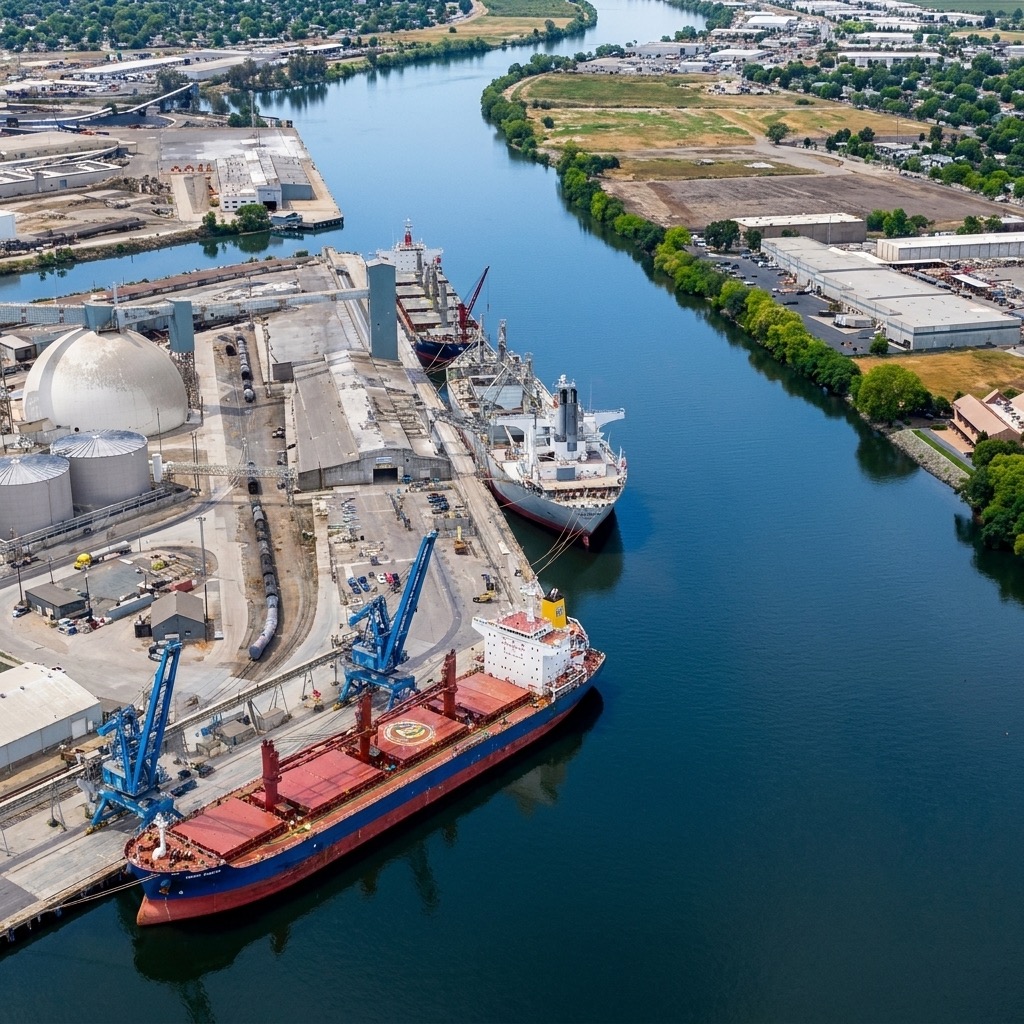
Industry is Stockton's structural advantage — the only Northern California city where a deep-water port, two Class I railroads, and the I-5/Highway 99 crossroads converge in one place.
Stockton was built to move goods. The Port of Stockton is one of California's busiest inland ports, reaching 75 nautical miles from the Pacific to bring ocean-going bulk and breakbulk cargo directly into the Central Valley, with Foreign Trade Zone #231 offering duty deferral to importers and exporters on site. BNSF and Union Pacific both operate intermodal facilities in the area, and the I-5 and Highway 99 interchange puts one-day truck service within reach of 40 million California consumers and the entire West Coast.
That infrastructure has made Stockton a distribution powerhouse. National operators including Amazon, and food and beverage manufacturers drawn by the surrounding farm belt, have filled millions of square feet of warehouse and production space across the city's industrial parks — from the Port's waterfront terminals to the logistics corridors along Arch Road and Airport Way near Stockton Metropolitan Airport, which adds air cargo capacity and foreign trade zone coverage of its own. Agriculture-adjacent processing, cold storage, and building-products manufacturing round out a sector that employs tens of thousands countywide.
The next phase is already underway. Entitled, shovel-ready sites remain available near the Port and along the Highway 99 corridor at land costs well below Bay Area and Sacramento industrial markets. The Port's ongoing terminal investments, the rise of e-commerce fulfillment, and California's push to electrify goods movement are all driving new demand — and Stockton's combination of zoned land, utility capacity, and a deep blue-collar workforce makes it the natural place to build.